


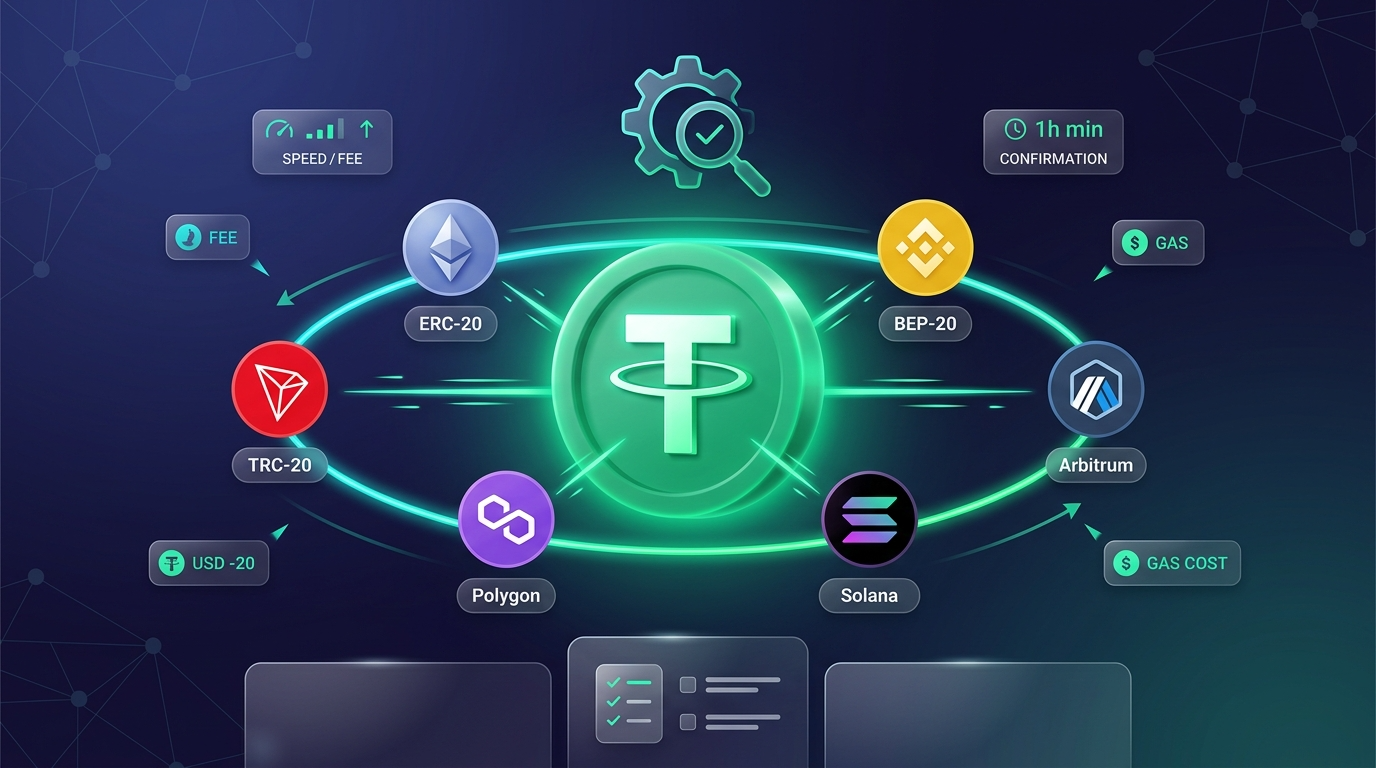
When working with cryptocurrency, users regularly transfer funds between exchanges, wallets, exchange services, and payment platforms. In many cases, USDT is used for these transactions—a stablecoin that maintains its peg to the US dollar and helps reduce exposure to market volatility. However, before confirming a transfer, it is important to determine which blockchain network will be used to move the tokens.
Many beginners believe that entering the recipient’s wallet address is enough, but in practice, the selected network plays a crucial role. It directly affects transaction costs, processing speed, and the successful delivery of funds. Choosing the wrong blockchain can result in additional expenses and complications when receiving assets.
For more useful insights on cryptocurrencies and digital payments, read the AtlantPay blog. Fast and secure cryptocurrency exchange in Ukraine and the EU. Transparent terms and competitive rates.
Why Does Tether Use Multiple Networks?
One of USDT’s key features is that it exists across several blockchain ecosystems simultaneously. Users receive the same stablecoin regardless of the network, but the transfer process follows the rules and technical standards of the selected blockchain.
This approach significantly expands the ways USDT can be used. Some blockchains offer very low transaction fees, others provide broad compatibility with financial services, while certain networks focus on fast transaction processing. As a result, market participants can choose the option that best suits their specific needs.
Before sending funds, it is essential to ensure that the selected blockchain is supported by both the sender and the recipient.
Which Networks Are Most Commonly Used for USDT Transfers?
Today, several popular options are available for working with Tether.
TRC20
For everyday transfers, many users prefer the Tron blockchain. This network has gained widespread adoption thanks to its low transaction costs and fast confirmation times. As a result, it is frequently used for cryptocurrency exchanges, international payments, and transfers between different platforms.
ERC20
USDT on the Ethereum network remains one of the most widely used standards in the cryptocurrency industry. This format is supported by virtually all major exchanges, crypto wallets, and investment platforms. At the same time, transaction fees can increase significantly during periods of heavy network activity.
BEP20
The BNB Smart Chain blockchain offers an effective balance between transaction speed and operational costs. Because of this, the format is actively used by both individual users and various cryptocurrency-related services.
Polygon, Arbitrum, and Optimism
The popularity of next-generation blockchain solutions continues to grow. These networks help reduce transfer costs while maintaining fast transaction speeds. As their infrastructure expands, support for these blockchains is becoming increasingly widespread across the cryptocurrency ecosystem.
What Should Be Considered Before Sending Funds?
When selecting a network, transaction fees should not be the only factor taken into account. Several other parameters can affect the convenience and efficiency of a transfer.
Before confirming a transaction, it is recommended to check:
whether the recipient’s wallet supports the selected network;
the estimated transaction fee;
the expected processing speed;
availability of network support on the platform being used;
future plans for using the received funds.
Spending a few extra minutes reviewing these details can help prevent common mistakes and significantly reduce risks when managing digital assets.
 Affiliate rate
 Be the first to receive favorable payment solutions
 Personalized technical support 24/7
 Unique bots to simplify your work
 Partner's personal cabinet
 Flexible customization system for any task






