


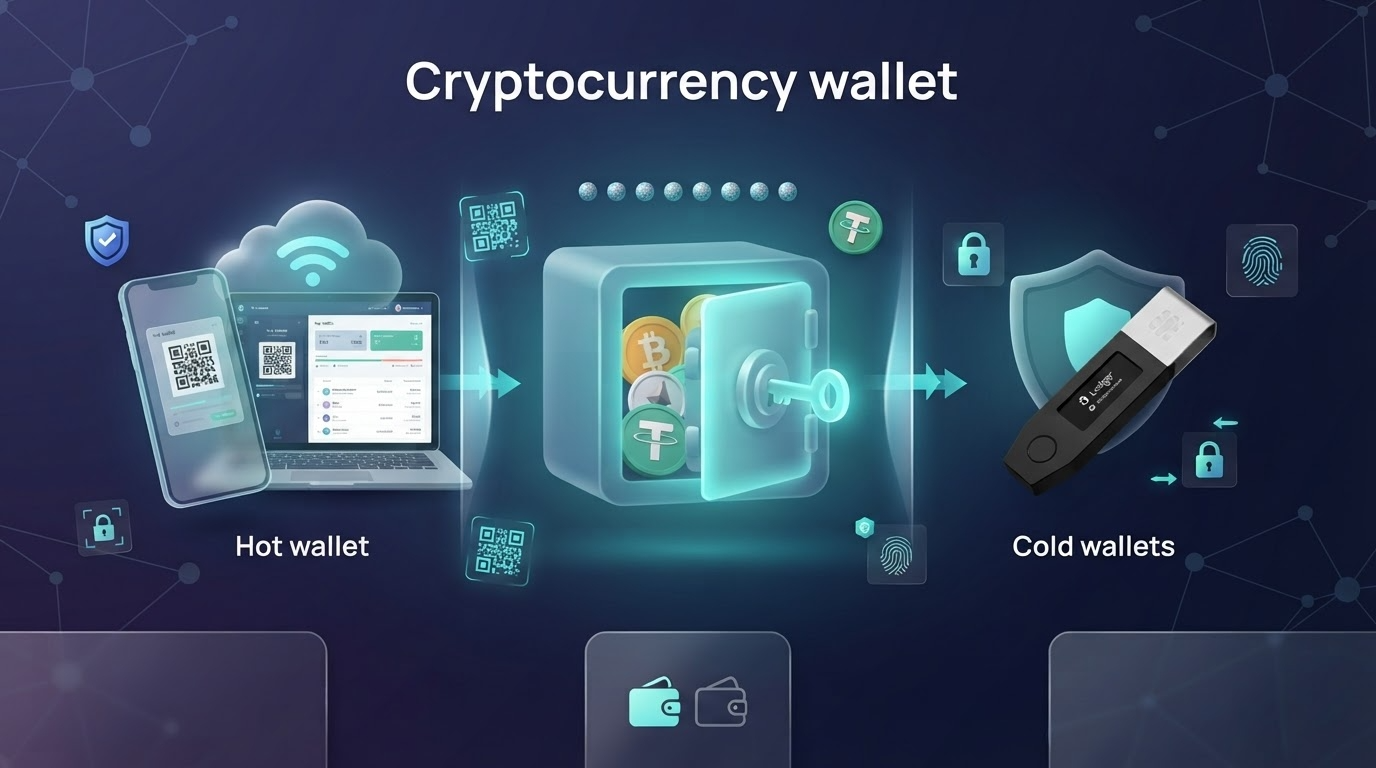
Any operation involving digital assets begins with the use of a cryptocurrency wallet. It is the tool that allows users to receive, send, and manage cryptocurrency. At the same time, many beginners mistakenly believe that coins are stored directly inside the wallet. In reality, digital assets remain on the blockchain, while the wallet serves as a tool for accessing them.
A cryptocurrency wallet is a software or hardware solution that enables users to interact with a blockchain network. It allows them to confirm transactions, monitor balances, and manage their assets. The foundation of a wallet’s functionality is a set of cryptographic keys that verify the owner's right to control and spend funds.
Read more useful articles about cryptocurrencies and digital payments on the AtlantPay blog. Fast and secure cryptocurrency exchange in Ukraine and the EC. Transparent terms and competitive exchange rates.
How a Cryptocurrency Wallet Works
Each wallet is assigned a unique address used to receive transfers. This address is generated from a public key and can be shared with other users without compromising security.
In addition to the public key, there is also a private key. It is this key that confirms ownership and grants access to digital assets. When a user sends cryptocurrency, the wallet signs the transaction using the private key and broadcasts it to the network for verification.
For this reason, protecting private credentials is critically important. Losing access to them may result in the inability to manage or recover funds.
Types of Cryptocurrency Wallets
Modern wallets differ in the way keys are stored and in the level of security they provide.
The most common types include:
• mobile wallet applications for smartphones;
• desktop software for computers;
• web wallets accessed through a browser;
• hardware wallet devices;
• paper wallets containing access keys.
Each option is designed for specific purposes. Some focus on convenience and quick access, while others prioritize maximum security.
The Difference Between Hot and Cold Wallets
All cryptocurrency wallets can be divided into two main categories.
Hot wallets are permanently connected to the internet. These include mobile applications, online services, and browser extensions. They are convenient for everyday transactions and frequent transfers.
Cold wallets do not require a constant internet connection. In most cases, these are hardware devices where private keys are stored offline. This approach is considered more secure for long-term storage of digital assets.
As a result, hot wallets are commonly used for daily operations, while cold wallets are preferred for storing larger amounts of cryptocurrency.
How to Choose the Right Wallet
When selecting a wallet, it is important to consider both your intended use and security requirements.
Before creating a wallet, pay attention to the following factors:
• supported cryptocurrencies and blockchain networks;
• backup and recovery options;
• available security features;
• user-friendly interface;
• account recovery capabilities;
• compatibility with different devices.
If cryptocurrency is used regularly for transfers and exchanges, a mobile wallet can be a practical solution. For long-term storage, hardware wallets are generally the preferred choice.
Why Security Matters
In most blockchain networks, responsibility for protecting funds lies entirely with the owner. If a third party gains access to a private key or recovery phrase, they may obtain full control over the assets.
To improve security, it is recommended to store the recovery phrase separately from the device, use strong passwords, and carefully verify the services and applications used to manage cryptocurrency.
A cryptocurrency wallet is the primary tool for managing digital assets. Through it, users gain access to their funds, authorize transactions, and interact with blockchain networks. Understanding how different types of wallets work helps users manage cryptocurrency more securely and choose a solution that best fits their needs and objectives.
 Affiliate rate
 Be the first to receive favorable payment solutions
 Personalized technical support 24/7
 Unique bots to simplify your work
 Partner's personal cabinet
 Flexible customization system for any task






